

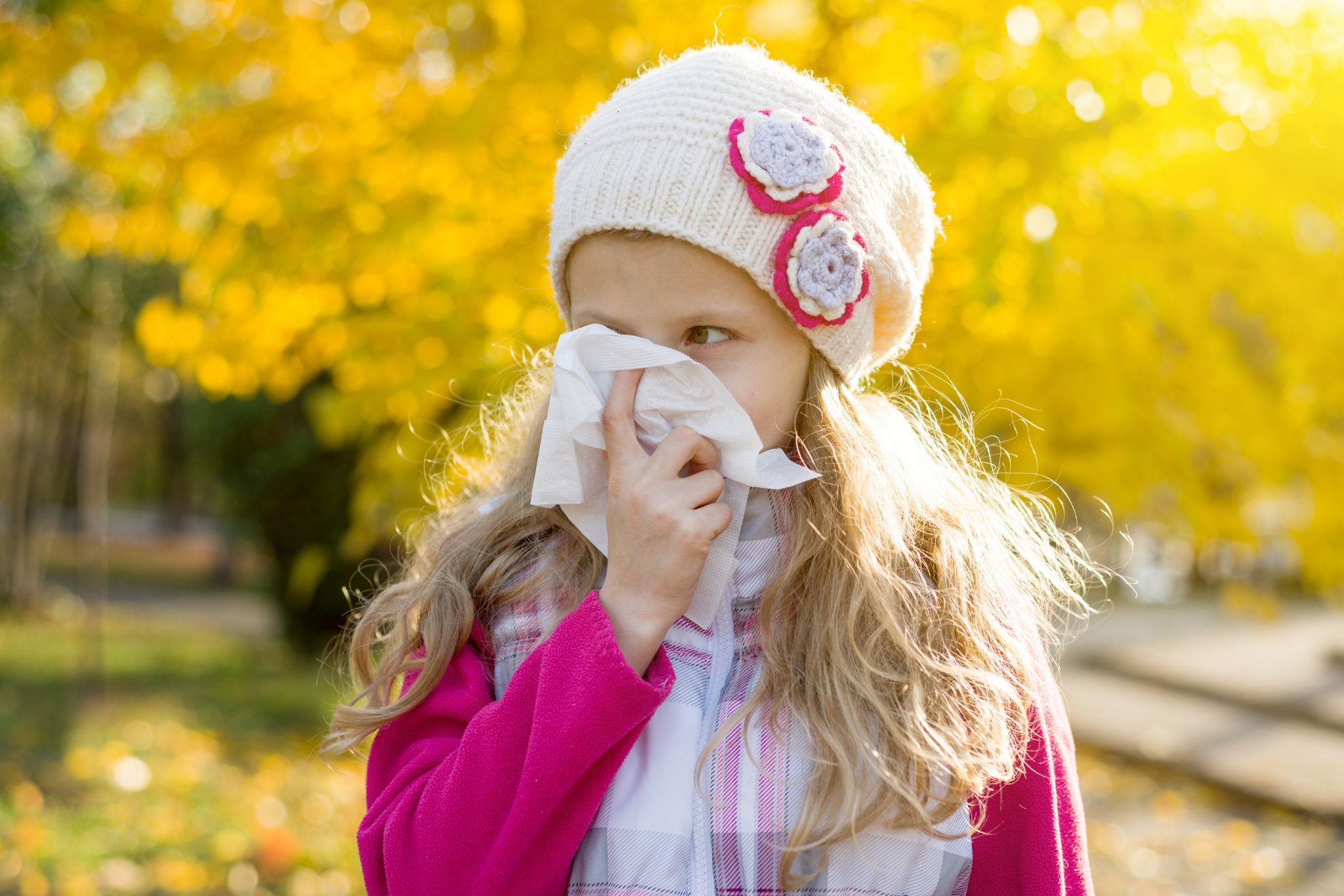
For many people, September is a time of new beginnings. After the summer vacations, we return to our usual routines; school and preschool start up again, and workplaces fill up. The weather is also slowly changing: on cooler mornings, a sweater or a light jacket comes in handy.
During the fall months, cold symptoms can become more common. More people around us are sneezing and coughing, and we, too, may wake up one morning with a scratchy throat, a runny nose, or a stuffy nose.
Read our article to find out why cold symptoms are more common in the fall, how to reduce the risk of infection, and what to do if you catch a cold!
Are we more likely to catch a cold in the fall?
When the weather turns cooler from one day to the next, we tend to blame a cold on not having a coat. In reality, a cold is caused by a viral infection, and many different viruses can trigger the characteristic upper respiratory symptoms.
Our daily routines also change during the fall months. Starting in September, schools, preschools, and workplaces fill up again, and we spend more and more time indoors. We also find ourselves in closer proximity to others on public transportation and in public spaces. These conditions can facilitate the spread of respiratory infections.
On cooler mornings, of course, it’s a good idea to dress for the weather. Layering is especially practical in the fall, as there can be a significant difference between morning and afternoon temperatures. With several layers of lighter clothing, we can easily adapt to changes throughout the day, especially if we’re away from home from early morning until late afternoon.
Handwashing: A Simple Step Toward Prevention
Throughout the day, we touch countless objects and surfaces that many people have touched before us—whether it’s a doorknob, handrails on public transportation, the handle of a shopping cart, elevator buttons, or shared equipment at work and school. At the same time, we often don’t even realize how frequently we touch our face, eyes, or nose, so pathogens on our hands can easily come into contact with our mucous membranes.
Regular and thorough handwashing with soap is a simple hygiene habit that is especially important during the fall and winter months, as it can help reduce the spread of certain infections. It’s a good idea to wash your hands when you get home, before eating and preparing food, after using the restroom, and after coughing, sneezing, or blowing your nose—as well as after coming into close contact with someone who is sick.
When coughing or sneezing, use a tissue and throw it away in the trash afterward; if a tissue isn’t available, cover your mouth and nose with the crook of your elbow—this reduces the chance that respiratory droplets will land on your hands and then spread to frequently touched surfaces. These simple hygiene habits require little effort, can easily become part of your daily routine, and can benefit the whole family during cold and flu season.
They may seem like small things, but it’s precisely these simple habits that are easiest to incorporate into everyday life.
Let’s not forget about ventilation!
As the weather gets cooler, we open our windows for longer periods less and less often, even though regular ventilation can be an important part of our daily routine during the fall and winter months. Fresh air is especially important in rooms where several people are present at the same time—such as offices, classrooms, or other communal spaces—since regular air exchange helps reduce the concentration of pollutants and particles containing pathogens that accumulate in indoor air.
Ventilation does not require windows to remain open for long periods of time, so it can easily be incorporated into your daily routine even on cooler days. By ventilating intensively for shorter periods several times a day, you can refresh the air in the room without causing your home or workplace to cool down significantly.
Boosting your immune system in the fall doesn’t depend on a single miracle cure
With the arrival of fall, we increasingly come across the term “boosting the immune system,” and at this time of year, a wide variety of vitamins, foods, and supplements take center stage. The functioning of the immune system is a complex process, so even in the fall, it’s worth focusing on everyday habits that support the body’s overall well-being.
A varied and balanced diet, adequate rest and sleep, regular exercise, and sufficient fluid intake all play an important role in this—and these are among the foundations of a healthy lifestyle throughout the year. Fall offers a great opportunity to rethink our daily routines and develop small, easy-to-follow habits that can become a natural part of our everyday lives in the long run.
Let’s add some color to our fall meals!
From this perspective, fall is a particularly rewarding season. A wide variety of seasonal fruits and vegetables can find their way onto our tables: apples, pears, grapes, pumpkin, cabbage, beets, and other fall ingredients can add color to our diet.
The key is, above all, variety and balance. Instead of relying on a single food or nutrient to ward off fall illnesses, it’s best to aim for a diet that regularly includes vegetables, fruits, and other nutrient-rich foods.
And while a hot soup or tea may be comforting in the fall, it’s important to know that these alone won’t “cure” a cold. Of course, they can still be a pleasant part of cooler days—and they can also help ensure adequate fluid intake.
It’s important to stay hydrated in the fall, too
In the summer heat, we generally notice more easily that our bodies need fluids, so we reach for a water bottle more often and pay closer attention to our fluid intake. On cooler fall days, the sensation of thirst may be less noticeable, so staying hydrated can easily take a back seat to daily tasks.
Our bodies need an adequate amount of fluids throughout the year, so it’s important to make sure we drink regularly throughout the day, even in the fall. In addition to water, unsweetened beverages—such as a nice warm cup of tea—can also contribute to your daily fluid intake, which can be especially comforting in cooler weather.
When you have a cold, it’s even more important to pay attention to your fluid intake, especially if you have a fever, as your body’s need for fluids may increase.
Rest is not time wasted
September is a busy time for many families, as daily life picks up again after the summer vacations: school starts, extracurricular activities and sports classes resume, and days at work can also become busier once more. At this pace, rest can easily take a back seat, even though getting enough high-quality sleep is an important part of a healthy lifestyle and plays a role in the body’s recovery.
The start of fall can be a good opportunity to reestablish a more predictable daily routine after the summer, one that includes time for evening relaxation and sufficient sleep. If you catch a cold, it’s even more important to pay attention to your body’s signals, slow down from your usual pace, and make sure you have enough time to rest until you feel better.
Exercise? Yes, even in the fall!
Just because summer is over doesn’t mean you have to stop being active.
The pleasant weather in September and October is perfect for walking, hiking, biking, or other outdoor activities. Regular exercise is part of a healthy lifestyle and can have a positive effect on your well-being.
You don’t necessarily have to think in terms of serious athletic performance. A brisk walk in the park, a weekend outing, or even choosing to walk instead of driving for a short trip can instantly bring more physical activity into your daily routine.
However, the situation is different when you’re sick: at times like these, it’s important to take your body’s signals seriously and rest if necessary.
And what if we do catch a cold?
Despite all precautions, we may wake up one morning with a scratchy throat, a stuffy nose, or just feeling under the weather.
Common symptoms of the common cold may include:
- a runny nose,
- a stuffy nose,
- sneezing,
- a scratchy or sore throat,
- coughing,
- fatigue and general malaise,
- and, in some cases, a slight fever.
Colds are caused by viruses, so antibiotics are not effective against the viruses that cause the common cold. Antibiotics should only be used as directed by a doctor.
In cases of a simple cold, rest and adequate fluid intake are especially important. Various symptomatic treatments may be available to relieve uncomfortable symptoms.
When using medication, always read the patient information leaflet and follow the instructions provided. If you are unsure which medication is appropriate for you, ask your pharmacist or doctor for advice.
A cold, the flu, or another respiratory infection?
During the fall and winter months, we may encounter various types of respiratory infections, the symptoms of which can often be similar; therefore, it is difficult to determine with certainty what exactly is causing the illness based on a single complaint. It is not advisable to diagnose yourself based on just one symptom.
The common cold usually involves milder symptoms, such as a runny nose, nasal congestion, or sneezing, while other respiratory infections can cause more severe general symptoms.
It is therefore advisable to monitor how your symptoms develop, and if your symptoms are unusually severe, worsen, persist for a long time, or if you are unsure about your condition, please seek help from a doctor or other healthcare professional.
When should you see a doctor?
Although the common cold usually clears up on its own, there are situations when it’s not advisable to wait at home for symptoms to improve.
You should see a doctor if, among other things, your symptoms persist or worsen, or if you experience difficulty breathing, chest pain, persistent vomiting, inability to drink fluids, or other unusual or severe symptoms.
Individual medical advice may be particularly important for people with chronic illnesses, the elderly, young children, and other high-risk groups.
7 Simple Habits for Fall
Getting ready for fall doesn’t have to be complicated. By adopting a few simple daily habits, we can go a long way toward preparing for the cooler months.
- Wash your hands regularly!
Especially after coming home, blowing your nose, coughing, or sneezing, and before eating. - Ventilate your home regularly!
Even in cooler weather, don’t forget to refresh the air in enclosed spaces. - Dress for the weather!
Layering your clothes makes it easier to adapt to fall’s temperature fluctuations. - Drink plenty of fluids!
Even after the summer heat has passed, make sure to stay hydrated. - Eat a varied diet!
Take advantage of the seasonal fruits and vegetables that fall has to offer. - Get regular exercise!
A walk or a weekend outing is a great opportunity to stay active. - Get enough rest!
After the summer, try to return to a more balanced daily routine and sleep schedule.
Let’s get ready for fall!
You don’t need complicated routines to prepare for cold and flu season. Regular handwashing, staying properly hydrated, eating a varied diet, exercising, getting enough rest, and a few mindful daily habits can provide a solid foundation for the fall months.
And let’s not forget: colds are caused by viruses, not just the cold weather itself. Of course, keep your scarf and sweater handy—they’ll definitely come in handy on a chilly September morning.
Let’s enjoy the colors of fall, pleasant walks, and evenings spent in the warmth of home—all while paying a little more attention to our own health and that of our surroundings!
Frequently Asked Questions (FAQ):
1. Do we really catch a cold from the cold weather?
No. The common cold is caused by viruses, not by low temperatures alone. However, conditions during the fall and winter months can contribute to the spread of respiratory infections.
2. What can we do to prevent colds?
It’s a good idea to wash your hands regularly, practice proper cough and sneeze etiquette, ventilate your living spaces, and maintain a balanced lifestyle with adequate hydration and rest.
3. Do antibiotics help with the common cold?
The common cold is caused by viruses, against which antibiotics are ineffective. Antibiotics should only be used as directed by a doctor.
4. What should we do if we’ve already caught a cold?
It’s important to get plenty of rest and stay hydrated. Symptom-relieving treatments may be available to alleviate your symptoms; always follow the instructions in the patient information leaflet when taking medication, and consult a pharmacist or doctor if necessary.
5. When should you see a doctor for cold symptoms?
If your symptoms persist, worsen, or if you experience, for example, difficulty breathing, chest pain, persistent vomiting, insufficient fluid intake, or other serious, unusual symptoms, you should seek medical attention.
Sources:
NHS: Common cold. https://www.nhs.uk/conditions/common-cold/
Cleveland Clinic: Common Cold. https://my.clevelandclinic.org/health/diseases/12342-common-cold